
Most grease trap companies get their customers the same way they did ten years ago. A restaurant owner asks another restaurant owner who cleans their trap. A plumber passes along a name. Someone finds a truck number on a sticker inside a kitchen.
Word-of-mouth works, until it doesn't. Until a slow month turns into a slow quarter. Until a national player like Wind River Environmental opens an office in your city with a marketing budget ten times your annual revenue. Until you realize that the 300 restaurants within 20 miles of your shop are Googling “grease trap cleaning near me” every month and calling whoever shows up first, and it's not you.
This is the complete digital marketing strategy for grease trap companies. Not theory. Not a list of tactics borrowed from an HVAC marketing guide and repackaged with “grease trap” swapped in. This is a system built from real campaigns in the grease trap vertical, including the work we did with our grease trap client, which scaled from a local operation to serving 3,000+ restaurant clients using the framework you're about to read.
If you run a grease trap service company anywhere in the USA, Canada, Australia or any part of the world and you want a predictable pipeline of commercial accounts, this is the playbook.
Why Most Grease Trap Companies Are Invisible Online
The grease trap industry has a marketing problem that most owners don't even realize exists.
Your customers, restaurant owners, facilities managers, hotel operations directors, school cafeteria managers, are not sitting around waiting for a referral. According to the U.S. Environmental Protection Agency's FOG management research, over 50% of food service establishments in the United States are mandated to maintain grease traps, and the National Restaurant Association's 2026 State of the Industry report projects $1.55 trillion in restaurant sales for 2026. That means more commercial kitchens, more regulation, and more demand for grease trap service than ever before.
When their grease interceptor backs up at 2pm on a Tuesday and the health inspector is coming Thursday, they grab their phone and search. “Grease trap cleaning near me.” “Emergency grease trap service [city].” “Grease trap pumping same day.” If your company doesn't appear in those results, you don't exist to that buyer. It doesn't matter that you've been in business for 15 years. It doesn't matter that you have the best equipment. It doesn't matter that every restaurant you've ever serviced loves you. If you're not visible when someone searches, the call goes to whoever is.
Here's what makes this worse: most of your competitors aren't doing it either. A handful of companies in each market have figured out Google Ads or stumbled into a decent Google Business Profile, but almost nobody is running a complete digital marketing system. But it won't stay open forever.
Want the shortcut? Skip ahead.
The Grease Trap Growth Playbook tells you exactly where you're leaking leads.
Case Study: The JP Grease Trap Service Story
Before we get into the strategy, here's the proof it works. Everything that follows comes from real campaign data, not from textbooks or generic marketing guides adapted for the trades.
JP Grease Trap Service came to us in the same position most grease trap companies are in today. Revenue came from word-of-mouth. There was no predictable pipeline. Good months were followed by slow months with no explanation. The business was entirely dependent on whether the phone happened to ring.
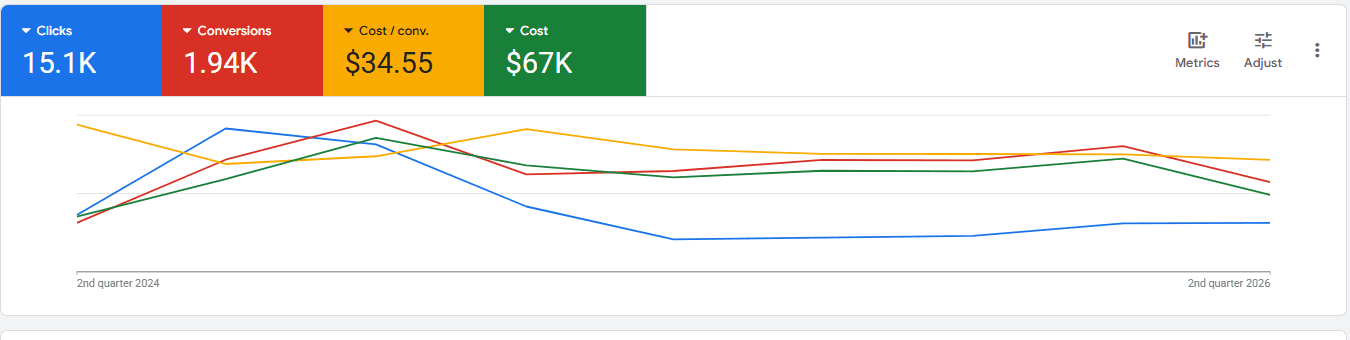
We built the UNCLOGGED Growth Model for them, implementing all three pillars simultaneously: Google Ads and Meta Ads for immediate lead flow, Google Business Profile optimization and local SEO for long-term visibility, and automation systems for lead follow-up, review generation, and recurring contract conversion.
The Results
3,000+
Restaurant Clients
10–15
Daily Qualified Leads
Dominating
the Market
The grease trap industry is not different from other service industries when it comes to digital marketing fundamentals. What is different is the depth of understanding required to execute correctly. Here's the exact system we used.
The Three Pillars of the UNCLOGGED Growth Model
Every effective marketing system for a grease trap company is built on three pillars. We call it the UNCLOGGED Growth Model, and it's the framework behind every campaign we run. We've built this system into a complete Grease Trap Marketing service for companies in the USA, Canada, Australia, and other markets worldwide.
Pillar 01 · Amplify
Consciously Amplify
Paid advertising, Google Ads, LSAs, Meta. The fastest path to new leads.
Pillar 02 · Anchor
Subconsciously Anchor
SEO, Google Business Profile, content. Free leads forever, but takes time.
Pillar 03 · Automate
Seamlessly Automate
Follow-up, reviews, recurring contracts. Where most companies lose the game.
Pillar 1: Amplify, Paid Advertising for Grease Trap Service Companies
This is the fastest path to new leads. When you run Google Search Ads targeting keywords like “grease trap cleaning [city]” and “grease trap service near me,” you are placing your company in front of people who need your service right now. Not tomorrow. Not next quarter. Right now.
Google Search Ads
Google Search Ads are the foundation because the intent is already there. Someone typing “emergency grease trap cleaning Dallas” is not browsing. They have a problem, they need it solved today, and they are ready to pay whoever can get there fastest. A properly built Google Ads campaign for a grease trap company targets exact-match and phrase-match keywords, uses a negative keyword list to block irrelevant searches, and sends traffic to a dedicated landing page, not your homepage, with a click-to-call button, a form, and social proof.
The cost? Expect to pay $2 to $15 per click for grease trap keywords depending on your market. That sounds expensive until you do the math. If your average new customer is worth $1,200 to $6,000 per year in recurring revenue, you need exactly one new account per month to pay for the entire campaign. Everything after that is profit.
Google Local Services Ads (LSAs)
Google Local Services Ads appear above regular search ads with your review rating, a “Google Guaranteed” badge, and a pay-per-lead model, you pay only when someone actually contacts you, not when they click. For grease trap companies with strong reviews, LSAs can be one of the most cost-effective lead sources available.
Meta Ads (Facebook & Instagram)
Meta Ads work differently. Google captures existing demand, someone is already searching. Meta creates new demand, you're reaching restaurant owners, facilities managers, and kitchen operators who need grease trap service but haven't searched yet. The targeting is surgical: job title, industry interest, custom audiences from your existing customer list.
Meta is also where retargeting lives. Someone visits your website, doesn't call, and leaves. Without retargeting, they're gone forever. With a Meta retargeting campaign, your company follows them across Facebook and Instagram for the next 30 days. When their trap needs service, who do they think of first?
Real Result · JP Grease Trap Service
The combination of Google Ads capturing high-intent searches and Meta Ads creating new demand from targeted restaurant owners was the engine behind their growth to 3,000+ restaurant clients.
Pillar 2: Anchor, SEO, Google Business Profile & Consistent Content
Paid ads get you leads today. SEO and content get you leads for free, forever, but they take time to build.
Google Business Profile Optimization
Google Business Profile (GBP) optimization is the single highest-ROI activity most grease trap companies are ignoring. When someone searches “grease trap cleaning near me,” Google shows a map with three businesses listed (the “3-pack”) before any other results. If you're in that 3-pack, you get calls. If you're not, you're invisible for that search.
Getting into the 3-pack requires three things: relevance, distance, and prominence. Here's what a fully optimized GBP looks like:
GBP Optimization Checklist
- Primary category: Waste Management Service
- Secondary categories: Septic, Drain, Plumber
- Services listed: Pumping, FOG, Emergency, Contracts
- Description: 750 chars w/ city + services
- Photos: 20+ branded, before/after, team
- Posts: 5x/week minimum
- Q&A: 5–10 seeded questions
- Review system: SMS link within 24hrs
Local SEO Through Service Area Pages
If you service 8 cities, you should have 8 individual pages on your website, one for each city, with unique content about local FOG regulations, the types of commercial kitchens you serve in that area, and localized testimonials. Most grease trap companies have a single “Service Areas” page with a bulleted list of city names. That does almost nothing for local rankings.
Content Marketing & Before/After Visuals
Content marketing in the grease trap industry means one thing above everything else: before-and-after visuals. Grease trap cleaning produces one of the most dramatic visual transformations in any trade. A thick, solidified block of FOG becomes a clean, flowing trap in 30 minutes. That visual, captured as a photo or a 15-second video, is the highest-performing content format available to your business. Train your crew to take a phone photo before they start and after they finish. Every job. Every channel.
Pillar 3: Automate, Follow-Up and Retention Systems
Here's where most grease trap companies lose the game. They generate a lead, someone fills out a form or calls, and then the follow-up is slow, inconsistent, or nonexistent.
21×
More Likely
Leads contacted within 5 minutes convert 21× more.
Per Harvard Business Review research. If you don't respond fast, your competitor will.
Automated Lead Follow-Up
The moment someone submits a form on your website, they receive an instant text message and an email confirmation. Simultaneously, your team gets an alert. This happens automatically, without anyone touching anything.
Post-Service Automation & Recurring Contracts
Post-service automation is how you turn a $400 emergency call into a $2,000 per year recurring account. After the first job:
- Send a thank-you email within 2 hours with a review request link
- Send a follow-up email 3 days later offering a recurring service contract at a discounted rate vs. one-time emergency pricing
- Send a service reminder 60–90 days later if they didn't sign a contract
This sequence converts one-time emergency callers into long-term, recurring revenue accounts, the foundation of every profitable grease trap business.
Referral Automation
Referral automation means systematically building relationships with plumbers, commercial property managers, health inspectors, restaurant supply companies, and commercial kitchen equipment installers, the people who interact with your target customers every day. A simple email or text sequence to your referral partners once per quarter (“Hey, just a reminder, we offer 10% referral credit on every new account you send our way”) keeps you top of mind without requiring manual outreach.
Our client didn't scale to 3,000+ restaurant clients by making more cold calls. They built a system where leads came in automatically, follow-up happened instantly, one-time customers converted to recurring accounts through automated sequences, and referral partners kept sending new business because the system reminded them to.
The Channel-by-Channel Budget Breakdown
Here's exactly what to budget across every marketing channel, what to expect for cost-per-lead, and how fast each channel produces results, broken down by company size.
| Channel | Budget | CPL | Time | Best For |
|---|---|---|---|---|
| Google Search Ads | Starts from $1,500 | $25–$75 | 1 week | High-intent searches |
| Google Local Services Ads | Pay-per-lead | $25–$50 | 2–4 weeks | 20+ reviews, 4.5★+ |
| Meta Ads (cold) | Starts from $600 | $15–$40 | 2–4 weeks | Demand creation |
| Meta Ads (retargeting) | Starts from $300 | $10–$25 | Immediate | Website visitors |
| Google Business Profile | Free | N/A | 30–90 days | Maps 3-pack |
| Local SEO (Service Areas) | Starts from $500 | N/A | 60–120 days | Multi-city visibility |
| Content & Social Media | Free | N/A | 30–180 days | Authority & creative |
The 90-Day Priority Sequence
If you're starting from zero, you can't do everything at once. Here's the order that generates revenue fastest:
Days 1–7
Foundation
Claim and fully optimize Google Business Profile. Set up call tracking. Make sure your website has click-to-call on mobile, a contact form above the fold, and your phone number visible on every page.
Days 8–21
Google Ads Launch
Build your keyword list, write your ads, create a dedicated landing page, and go live. This is the fastest path to booked calls.
Days 22–45
Follow-Up Automation
Set up instant lead response (text + email), post-service review request automation, and recurring contract offer sequences.
Days 30–60
GBP Content
Start posting weekly, before-and-after photos, service tips, customer testimonials. Begin systematically requesting reviews.
Days 45–75
Meta Ads
Launch retargeting campaigns for website visitors first. Then cold prospecting targeting restaurant owners and facilities managers.
Days 60–90
Local SEO
Build individual service area pages for every city you serve. Build citations. Publish your first blog post focused on FOG compliance.
Don't want to wait 90 days to figure this out yourself?
Get the Grease Trap Growth Playbook, your step-by-step roadmap.
AI Search: ChatGPT, Claude & Google AI Overviews
There's one more channel emerging right now that most marketing agencies haven't caught on to yet.
AI-powered search tools like ChatGPT, Claude, Google AI Overviews, and Perplexity are changing how people find service providers. When a restaurant owner asks ChatGPT “what's the best way to find a reliable grease trap cleaning service,” the AI pulls from the most authoritative, comprehensive content it can find online.
ChatGPT
Claude
AI Overviews
Perplexity
You don't need a separate “AI SEO” strategy. You need to execute this strategy well, and AI visibility comes as a byproduct. The grease trap companies that have comprehensive, well-structured, factually accurate content about their services and their industry will be the ones AI tools recommend.
This is not theoretical. It's already happening. And the window for local service businesses to establish themselves as the authoritative source in their niche, before larger competitors do, is right now.
The Cost of Doing Nothing
Let's make this tangible.
If there are 500 restaurants in your service area, and 10% of them search for grease trap service in any given month, that's 50 potential customers. If your close rate is 30% and your average annual customer value is $2,400, each new customer is worth $2,400/year.
The Math · Per Month
= $36,000
in new annual recurring revenue. Every. Single. Month.
If you're not showing up in those searches, that revenue is going to whoever is. Your competitors. The national consolidators. The company in the next city over who decided to run Google Ads six months ago.
Every month you wait is not neutral. It's a month where your competitors are building reviews, accumulating ad data, establishing ranking authority, and signing the recurring contracts that should be yours.
What To Do Right Now
You've read the strategy. Here's the honest question: are you going to implement it yourself, or do you need someone to build it for you?
If you're the type of operator who wants to do this yourself, everything in this article is actionable. Start with your Google Business Profile. Set up call tracking. Build a Google Ads campaign. Take before-and-after photos on every job. It will work, it just takes time and discipline.
If you want it built for you by the only agency that specializes exclusively in digital marketing for grease trap companies, and by the team that built the system that scaled JP Grease Trap Service to 3,000+ restaurant clients, we should talk.
Your Next Step
Get a Free Grease Trap Marketing Audit
In 15 minutes we'll go through:
- Where you're losing leads
- What competitors are doing
- Growth opportunities in your market
- Fastest path to more restaurant contracts

Want it done for you? Book the Audit. Want to DIY? Get the Playbook.
Frequently Asked Questions
Yes, when it's set up correctly. Most grease trap companies that have tried Google Ads and failed were running broad-match keywords without negative keyword lists, sending traffic to their homepage instead of a landing page, and had no call tracking to measure results. A properly structured campaign targeting high-intent keywords with dedicated landing pages consistently generates qualified leads in the grease trap vertical.
Google Business Profile optimization can start generating additional calls within 30 to 60 days. Service area pages typically begin ranking in local search within 60 to 120 days. Full local SEO programs including GBP optimization, service area pages, citation building, and review generation generally show significant results within 90 to 180 days, with compounding returns over time.
Google Ads captures existing demand by reaching people actively searching for grease trap service right now. Meta Ads on Facebook and Instagram create new demand by reaching restaurant owners, facilities managers, and kitchen operators who need service but have not searched yet. Most grease trap companies should start with Google Ads for immediate lead flow, then add Meta Ads for prospecting and retargeting once the Google campaigns are profitable.
Local operators have advantages that national companies can't replicate: faster response times, personal relationships with restaurant owners, deeper knowledge of local FOG regulations, and community trust. A strong digital marketing system, Google Ads, an optimized Google Business Profile, active reviews, and local content, creates a competitive barrier that national players cannot easily overcome at the local level. The companies that invest in digital marketing now will hold their ground. The companies that don't will lose market share to operators with bigger budgets and broader reach.
Google Business Profile powered by Google Ads. It's free, it drives calls from the Maps as well as calls and inquiries from Google Strategic Ad placements, it builds review-based trust, and it serves as the foundation for both paid and organic search visibility. If you only do one thing from this entire strategy, make it a fully optimized Google Business Profile with a systematic review request process along with Google Ads.
About the Author
Parth Purohit · Founder, Copper Social
Parth is the founder of Copper Social (coppersocial.ca), the only digital marketing agency in USA, Canada, Australia and several other countries that works exclusively with grease trap and septic service companies. His work has helped a client scale to 3,000+ restaurant clients using the UNCLOGGED Growth Model, the most documented growth case study in the grease trap industry. Want to DIY? Get the Playbook. Want it built for you? Book the Audit.